
5 Ways to Create a Wedding Ceremony That Actually Feels Like You
from someone who officiates 100+ ceremonies per year
by Grit City Weddings
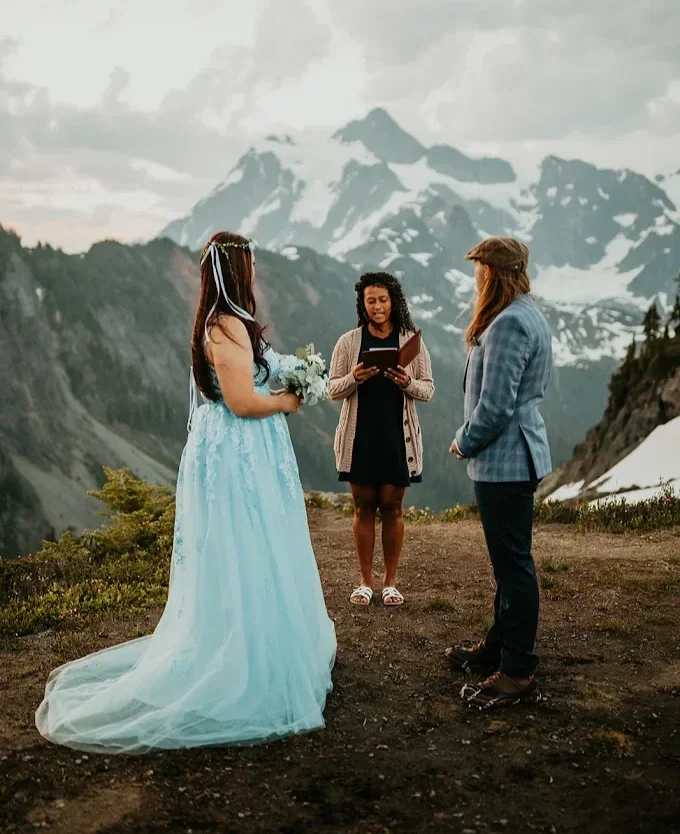
If you want a ceremony that actually feels like you, Cherise is your person.
As the officiant behind Another One Ties the Knot, she’s known for creating ceremonies that are personal, intentional, and never cookie-cutter.
She got her start by officiating a friend’s backyard wedding after getting ordained online - then realized just how powerful the ceremony can be. In her own words: “I thought it was just a formality… but it ended up being my favorite part of the whole day.”
Photo by Van Gachnang
If you want your ceremony to actually feel like you, here are five ways to make that happen.
1. “Short & Sweet” Doesn’t Mean Forgettable
One of the most common things couples say is: “We just want something short and sweet.”
And that’s completely valid.
But “short” doesn’t have to mean generic, and it definitely shouldn’t feel like something that could belong to anyone.
As Cherise shared with us, her own ceremony was meant to be simple, but what surprised her most was how personal it became:
“I just expected him to say the things you're supposed to say… and he ended up talking about us. It completely caught me off guard, and it ended up being our favorite part.”
2. Personalization Is More Than Your Love Story
A lot of couples think personalization starts and ends with how you met. But a ceremony can reflect:
Your personality
Your relationship dynamic
Your tone as a couple
Because two couples can have similar stories, and completely different ceremonies.
As Cherise puts it: “It’s not just about their love story, it’s about their style.”
That might mean:
Lighthearted and playful
Quiet and emotional
Or something entirely your own
The key is making sure it sounds like you, not just a template.
3. Choose an Officiant Who Can Do Both: Personal + Professional
There’s a big difference between someone who can legally marry you, and someone who can actually lead a ceremony.
A professional officiant brings more than just words. They bring:
Flow and timing
Microphone awareness
Coordination with vendors
Confidence in front of a crowd
And understanding of the legal process
As Cherise explained: “You’re hiring your home girl - but she’s professional.” That balance matters.
Because while the ceremony should feel personal, it also needs to run smoothly, and that’s where experience makes all the difference.
4. Rethink Traditions (You Don’t Have to Do Them All)
There’s a common assumption that ceremonies have to follow a certain script:
“Who gives this woman…”
“Bride and groom…”
Traditional phrasing and structure
But none of that is required. In fact, many couples are choosing to modernize the language entirely.
For example:
Using “the couple” instead of “bride and groom”
Skipping the “giving away” moment
Rewording vows to feel more natural
Choosing inclusive language
As Cherise shared: “You can still have something traditional but modernized.”
It’s not about removing meaning. It’s about making sure the meaning actually fits you.
5. Don’t Remove the Most Important Part-Your Voices
One trend that’s been popping up in the past few years is couples choosing to do private vows only, and removing them from the ceremony entirely.
While private moments are meaningful, it can leave something missing from the ceremony itself.
Because your guests aren’t there to hear an officiant talk. They’re there to witness you getting married.
As Cherise explained: “They’re not coming to see a show. They’re coming to watch you get married.”
That doesn’t mean your vows have to be long or deeply emotional. But saying something - even a simple version - keeps the ceremony grounded in what it actually is: a shared, witnessed commitment.
How will you make your ceremony reflect the two of you?
At its core, a wedding ceremony is simple.
Legally, the only thing that has to happen is the “I do.”
Everything else? That’s how you choose to tell your story.
